The hardest puzzles in history and the minds that solved them
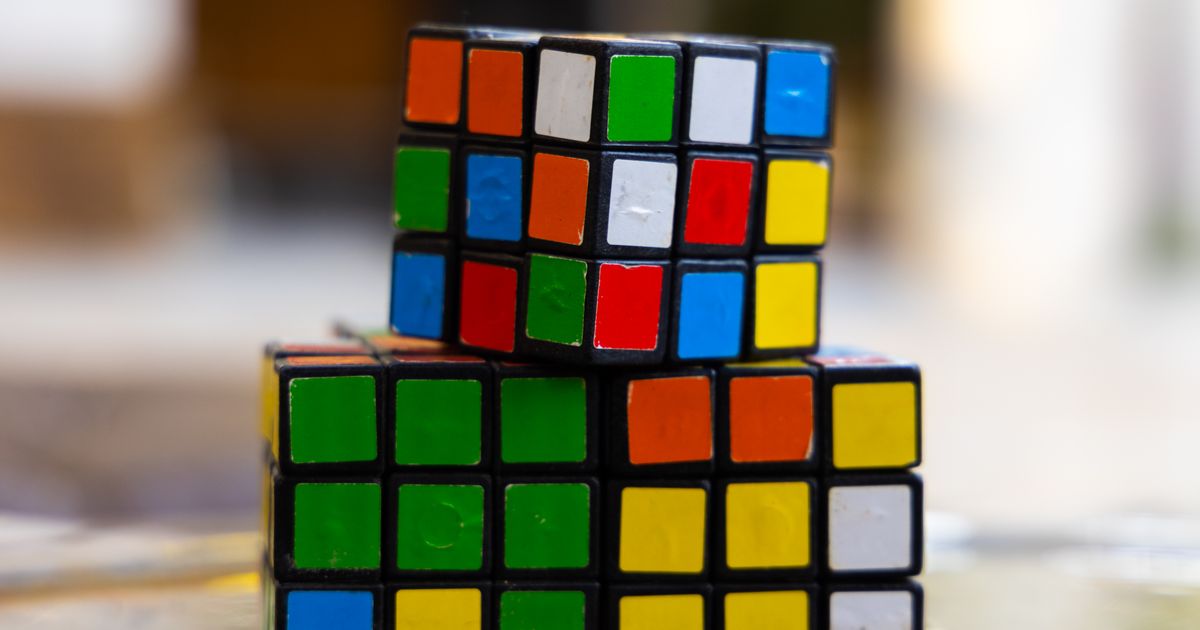
Some puzzles are solved over a coffee; others have challenged mathematicians for years. The latter share one thing: you don't win them with brute force or luck, but with pure logic and patience. Here we review some of history's most famous challenges and the kind of reasoning they demand, so you can then test your own in our free online sudoku.
The world's hardest sudoku: Arto Inkala's "Everest"
In 2012, the Finnish mathematician Arto Inkala presented a sudoku designed to be, in his words, the hardest ever created. It wasn't hard because of fewer clues, but because of the depth of the logical chain needed to solve it: every number forced you to link very long deductions, with no cell being "obvious" at a glance.
Inkala had already amazed everyone in 2006 with another legendary sudoku, AI Escargot, whose clue pattern resembles a snail. His work proved something fascinating: a sudoku's difficulty doesn't depend on how many cells are empty, but on how much reasoning it takes to fill each one. A sudoku with many clues can be brutal, and one with few clues, easy.
The mind that solved it: Inkala himself, who used algorithms to measure the logical complexity and guarantee a single solution reachable through deduction alone, never guessing.
Einstein's riddle: pure logic without numbers
Popularly attributed to Albert Einstein (though there's no evidence he wrote it), this riddle sets out five coloured houses, with neighbours of different nationalities, pets, drinks and cigarettes, and one final question: who owns the fish?
It's said — surely as a legend — that "only 2% of people can solve it". The reality is more interesting: anyone can do it with method, because it's a pure deductive logic problem. You solve it by building a table and eliminating possibilities one by one, exactly the same reasoning you use in a sudoku or a minesweeper. There's no hidden trick: you just have to be organised and not give up.
The Tower of Hanoi: mathematical elegance
Invented by the French mathematician Édouard Lucas in 1883, the Tower of Hanoi is a puzzle of discs of different sizes stacked on a rod. The goal is to move the whole tower to another rod, moving one disc at a time and never placing a larger disc on a smaller one.
Its elegance lies in the maths: solving a tower of n discs requires at least 2ⁿ − 1 moves. With 3 discs that's 7; with 10, over a thousand. Lucas paired it with a legend: monks would move a tower of 64 discs, and when they finished, the world would end. Relax: at one move per second, it would take more than 500 billion years.
The mind that understood it: Lucas not only created the game but revealed its recursive pattern, now a classic example in teaching programming.
What they have in common (and what you can learn)
These three challenges share the DNA of every good puzzle:
- A single solution reachable through logic alone, never luck.
- Simple rules that hide enormous depth.
- They're beaten with method: organise the information, rule out the impossible and advance step by step.
It's exactly the same skill you train every time you solve a hard sudoku without guessing. The difference between an "impossible" riddle and a solved one is almost never raw intelligence: it's patience and a system.
Put your mind to the test
You don't need to be a mathematician to enjoy the challenge. Start with a hard sudoku and apply the same elimination logic that solves Einstein's riddle, or try our sliding puzzles if you prefer a visual challenge. And if you're curious about the origins, don't miss the history of sudoku.